When it comes to building a high-quality audio system, the subwoofer plays a critical role in delivering deep, impactful bass that enhances the overall listening experience. Bass frequencies are often the foundation of music, movies, and gaming, creating depth and realism that higher-frequency speakers alone cannot achieve. Choosing the right type of subwoofer is essential to achieving a balanced, immersive sound environment.
Among the many options available, the two primary types of subwoofers are active subwoofers and passive subwoofers. An active subwoofer features a built-in amplifier, allowing for straightforward installation and consistent performance without the need for additional components. On the other hand, passive subwoofers rely on an external amplifier, providing a different level of flexibility and scalability. Deciding which type to pick requires careful consideration of your audio needs, room characteristics, budget, and technical expertise.
This guide will provide a detailed comparison of active and passive subwoofers, highlighting their features, advantages, and practical considerations, helping you make an informed decision for your audio setup.
1. Understanding Active Subwoofers
What Is an Active Subwoofer?
An active subwoofer is a self-powered audio device that includes a dedicated amplifier built into the enclosure. This amplifier is specifically designed to drive the subwoofer driver efficiently, ensuring precise low-frequency reproduction. Unlike passive subwoofers, which require an external amplifier, active subwoofers offer a simplified solution where the power and speaker design are perfectly matched. This integration not only guarantees optimized performance but also minimizes signal loss and distortion.
Key Features of Active Subwoofers
Built-in Amplifier – Provides the exact power needed for the subwoofer driver, eliminating the risk of mismatched amplification.
Adjustable Crossover – Enables users to fine-tune the frequency range, ensuring a smooth blend with other speakers.
Phase Controls – Aligns the subwoofer’s output with the rest of the audio system, reducing phase cancellation and uneven bass.
Ported or Sealed Enclosures – Offers options for either deep, powerful bass or tight, controlled low-frequency response.
Connectivity Options – Includes RCA, LFE, and sometimes wireless interfaces for versatile integration into various audio systems.
Typical Use Cases
Active subwoofers are suitable for multiple applications, including home theater systems, music listening setups, and gaming rigs. Their built-in amplification and tuning controls allow users to achieve consistent and high-quality bass regardless of room size or audio content type.
2. Understanding Passive Subwoofers
What Is a Passive Subwoofer?
A passive subwoofer does not contain a built-in amplifier. It relies entirely on an external amplifier or AV receiver to provide the necessary power for the subwoofer driver. While the subwoofer itself contains the speaker and enclosure, all amplification must come from an external source, making setup more complex but offering certain benefits in terms of system customization.
Key Features of Passive Subwoofers
No Built-in Amplifier – Requires careful matching with an external amplifier to ensure proper performance.
Customizable Power Options – Can be paired with different amplifiers to achieve desired output levels and tonal quality.
Flexibility for Advanced Users – Ideal for users who prefer to design their own amplification setup and system configuration.
Advantages and Limitations
Advantages:
Potentially lower upfront cost if a compatible amplifier is already available.
Flexibility to upgrade or replace amplifiers without changing the subwoofer.
Compatible with a wide range of existing audio systems and professional setups.
Limitations:
Requires technical knowledge to match amplifier and subwoofer specifications.
Setup is more complex than with active subwoofers.
Performance heavily depends on the external amplifier’s quality and output.
3. Key Differences Between Active and Passive Subwoofers
Understanding the core differences between active and passive subwoofers is essential for making an informed decision. Key aspects include:
Power and Amplification
Active subwoofers come with a built-in amplifier designed to perfectly match the driver’s specifications. Passive subwoofers depend on an external amplifier, meaning the quality and power of the amplifier directly affect performance. This distinction can influence sound clarity, bass depth, and overall system reliability.
Installation and Setup
Active subwoofers are typically plug-and-play, requiring minimal setup and adjustments. Passive subwoofers, by contrast, require careful amplifier matching and correct wiring, which can be challenging for beginners or users without technical experience.
Sound Quality and Performance
Active subwoofers often provide more consistent and controlled bass performance due to the integrated amplifier and tuning options. Passive subwoofers’ performance varies based on amplifier choice, wiring, and system calibration, which can result in less predictable results.
Cost Considerations
While active subwoofers usually have a higher initial cost due to the built-in amplifier, they often save money in the long term by eliminating the need for additional amplification equipment. Passive subwoofers can be more cost-effective if a compatible amplifier is already available, but additional investment may be needed for optimal performance.
Flexibility and Scalability
Passive subwoofers offer greater flexibility in terms of amplifier upgrades and system customization. Active subwoofers are limited by their built-in amplifier specifications, though this limitation is often acceptable for standard home and professional audio setups.
4. Factors to Consider Before Choosing
Before selecting a subwoofer, consider the following factors:
Room Size and Acoustics
The dimensions and acoustics of your room greatly influence bass performance. Active subwoofers often include built-in adjustments to adapt to different room characteristics, while passive subwoofers may require precise amplifier matching and careful placement to achieve the desired sound.
Type of Content
Movies: Benefit from subwoofers capable of producing deep, impactful low frequencies.
Music: Requires accurate and controlled bass reproduction for clarity and balance across all genres.
Gaming: Immersive experiences rely on precise low-frequency cues to convey environmental sounds and effects.
Budget and Investment
Active subwoofers have a higher upfront cost but simplify the audio system and reduce the need for additional components. Passive subwoofers can be more affordable initially if an amplifier is available, but achieving optimal performance may require further investment.
Technical Knowledge
Active subwoofers are ideal for beginners or users seeking plug-and-play convenience, while passive subwoofers are suited to experienced audiophiles who can handle amplifier selection and system calibration.
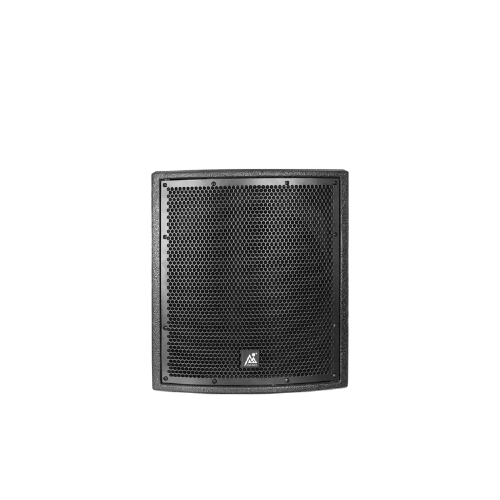
5. Advantages of Choosing an Active Subwoofer
Simplified Installation
The built-in amplifier in an active subwoofer allows for easy setup. Users can connect the subwoofer directly to an audio source and adjust volume, phase, and crossover settings without needing additional amplification components.
Optimized Performance
Active subwoofers deliver consistent, distortion-free bass because the amplifier is perfectly matched to the driver. This ensures high-quality low-frequency reproduction across a variety of listening environments.
Built-in Protection Features
Many active subwoofers include safety mechanisms such as thermal protection, overload protection, and short-circuit prevention. These features protect both the amplifier and the driver, extending the device’s lifespan and ensuring reliable operation.
Fine-Tuning Options
Adjustable crossover, phase, and volume controls allow users to customize the subwoofer output to complement the main speakers. These controls enhance the integration of the subwoofer with the overall audio system, resulting in a balanced and immersive sound experience.
6. Advantages of Choosing a Passive Subwoofer
Lower Upfront Cost
Passive subwoofers can be more affordable initially if a suitable amplifier is already part of the audio setup, making them attractive for users looking to expand existing systems without additional investment.
Flexibility to Upgrade
Since passive subwoofers rely on external amplification, users have the freedom to upgrade amplifiers over time. This flexibility allows for incremental improvements to system performance without replacing the subwoofer itself.
Compatibility
Passive subwoofers can integrate with various amplifiers and receivers, offering versatility for customized audio systems, professional setups, and high-power configurations.
7. Making the Right Choice
To make the decision easier, here’s a summary table comparing active and passive subwoofers:
Feature | Active Subwoofer | Passive Subwoofer |
Built-in Amplifier | Yes | No |
Setup Complexity | Easy | Moderate/High |
Sound Quality Control | High | Depends on amp |
Scalability | Limited | Flexible |
Cost | Higher | Lower (if amp included) |
Recommendations
Beginners or Plug-and-Play Users: Active subwoofers, due to simplicity and built-in optimization.
Custom or High-End Systems: Passive subwoofers, for greater control over amplification and system design.
Home Theater or Small-to-Medium Rooms: Active subwoofers typically provide ideal performance.
Advanced Audiophile Setups: Passive subwoofers may be preferable for users wanting maximum flexibility and system customization.
8. Conclusion
Choosing between an active and passive subwoofer depends on several factors, including your audio needs, room size, technical knowledge, and budget. Active subwoofers are ideal for most home setups, offering simplicity, optimized performance, and consistent, high-quality bass without the need for additional amplification. Passive subwoofers, on the other hand, provide greater flexibility for users who prefer full control over their amplification and system configuration.
To ensure you select the right subwoofer that perfectly matches your setup and listening preferences, it is important to explore reliable and high-quality options. Dongguan Lihui Technology Co., Ltd. specializes in advanced active subwoofers designed for both home and professional audio environments. Their products feature built-in amplifiers, adjustable crossovers, phase controls, and robust enclosures to deliver deep, immersive bass with clarity and precision. For anyone seeking expert guidance, detailed specifications, or assistance in selecting the best subwoofer for music, movies, or gaming, reaching out to their team can provide valuable insights and ensure you make the most informed decision for your audio system.
9. FAQ
Q1: What is the main difference between an active and passive subwoofer?
A: Active subwoofers have a built-in amplifier, while passive subwoofers require an external amplifier.
Q2: Can I use a passive subwoofer without an amplifier?
A: No, passive subwoofers must be connected to a compatible external amplifier to function.
Q3: Is an active subwoofer better for beginners?
A: Yes, because it simplifies setup and ensures optimized performance without technical expertise.
Q4: How does room size affect the choice between active and passive subwoofers?
A: Larger rooms may require higher-power subwoofers or tuning adjustments. Active subwoofers often include built-in features to adapt to different room sizes.
Q5: Can I upgrade a passive subwoofer to an active system later?
A: While you can pair it with an amplifier, a passive subwoofer cannot be converted to a true active subwoofer without internal modifications.


 +86-18822957988
  rick@lihuitech.com
  +86-13925512558
  Hengbang Technology Park Lihui Technology Co., Ltd., No. 8 Weiheng Road, Niushan Industrial Zone, Dongguan City