Whether you're a seasoned musician or a weekend performer, having the right equipment is essential to delivering a strong live performance. One of the most frequently asked questions by aspiring performers and home studio enthusiasts is: Can you use a guitar amp as a vocal monitor? This topic has become increasingly relevant in recent years, particularly due to the rise in home recording setups, budget-conscious musicians, and DIY live performances. With the increasing versatility of music gear and the always-expanding market of audio equipment, understanding the proper use and limitations of devices like a guitar amp is vital.
This article will dive deep into the core differences between a guitar amp and a vocal monitor, explore technical specifications, analyze product comparisons, and ultimately help you decide whether it's practical or advisable to use a guitar amp for vocals. We will also look at the latest trends in the audio industry, especially developments that blur the line between instrument amplifiers and full-range monitors.
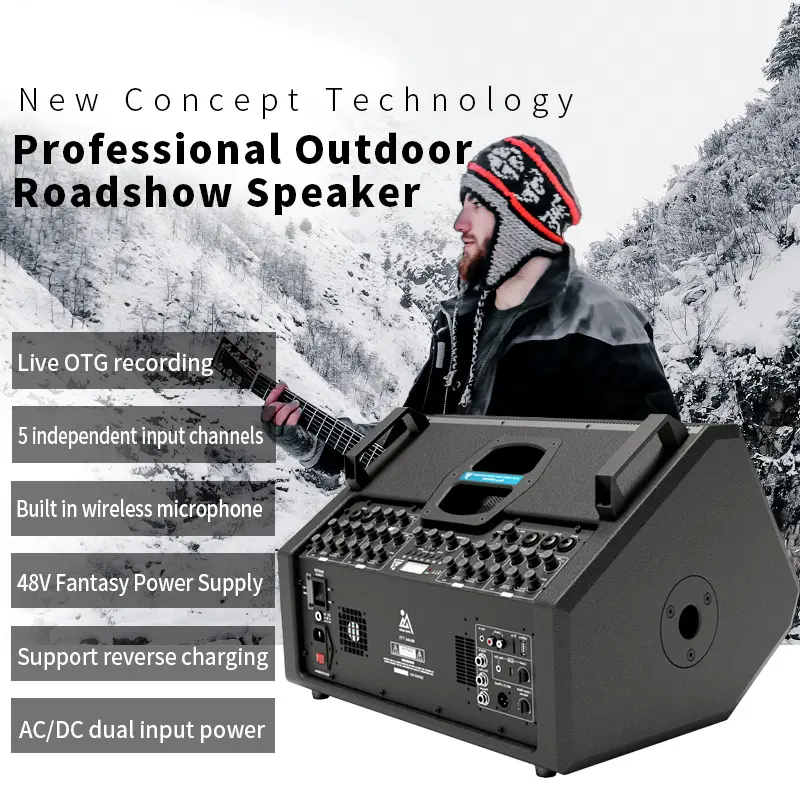
What is a guitar amp?
A guitar amp, short for guitar amplifier, is an electronic device designed to amplify the sound of an electric or acoustic guitar. It serves as the bridge between the guitar and the audience or recording device, transforming the low-level signal from the guitar's pickups into a powerful output sound.
Components of a Guitar Amp
Preamp Section – Shapes the tone of the guitar signal and typically includes EQ controls.
Power Amp Section – Amplifies the signal to drive the speaker.
Speaker – Converts the amplified signal into audible sound.
Cabinet – The physical enclosure that houses the speaker(s).
There are various types of guitar amps, including:
Tube Amps – Known for their warm tone and dynamic response.
Solid-State Amps – More durable and consistent in tone.
Modeling Amps – Use digital processors to emulate various amp sounds.
Hybrid Amps – Combine elements of tube and solid-state technologies.
Guitar amps are specifically voiced for guitar frequencies, typically focusing on the midrange and rolling off low and high frequencies that don't enhance the instrument's tone.
What is a vocal monitor?
A vocal monitor, often part of a PA system, is an audio device used to project the singer's voice on stage or in a studio. Unlike a guitar amp, which is instrument-specific, a vocal monitor is designed to reproduce a full range of audio frequencies, from deep bass to crisp treble.
Common Features of a Vocal Monitor
Flat Frequency Response – Ensures accurate sound reproduction.
High Power Output – Suitable for loud environments.
Durable Enclosure – Designed for stage use.
Multiple Input Types – Accommodates microphones, mixers, and other audio sources.
Vocal monitors are typically used in conjunction with mixers, microphone preamps, and sound reinforcement systems to deliver clear and powerful vocals to performers.
What is the difference between guitar amp and vocal monitor?
To determine whether a guitar amp can be used as a vocal monitor, it's crucial to understand the fundamental differences between the two. Here's a comparison table to highlight the key distinctions:
| Feature | Guitar Amp | Vocal Monitor |
| Frequency Response | Narrow (optimized for midrange) | Wide (20Hz–20kHz) |
| Input Type | 1/4" instrument input | XLR & 1/4" combo (mic/line) |
| Sound Clarity | Colored tone for guitar | Flat, accurate reproduction |
| Speaker Configuration | Single or dual speakers, mid-heavy | Full-range speaker + tweeter |
| Power Handling | Lower wattage (20W–100W typical) | Higher wattage (100W–2000W) |
| Intended Use | Guitar amplification | Vocal and instrument monitoring |
| Portability | Often portable | Varies (floor wedges, speakers) |
Key Technical Differences
Frequency Response: A guitar amp typically focuses on 70Hz to 5kHz, while human vocals require clarity from 100Hz to 15kHz or more.
Input Sensitivity: Most guitar amps are not equipped with microphone preamps, which makes it difficult to connect a microphone directly without a mixer or DI box.
Can you use a guitar amp as a vocal monitor?
Short Answer: Yes, but with limitations.
While it is technically possible to use a guitar amp as a vocal monitor, it is not an ideal solution for most scenarios. Let's explore the circumstances, pros, and cons.
When It Might Work
Practice Settings: If you're in a home studio or rehearsing with minimal volume, plugging a microphone into a guitar amp via a mixer or preamp can work in a pinch.
Busking or Street Performing: For small setups where portability and power efficiency trump sound fidelity, a guitar amp might serve as a basic vocal projection solution.
Hybrid Amps or Modeling Amps: Some modern guitar amps offer full-range speakers and multiple input types, making them more suitable for vocal use.
Why It Isn't Recommended for Professional Use
Poor Frequency Response for Vocals: The guitar amp's EQ is tailored for instruments, not human voice. It may sound muddy or harsh.
Lack of Mic-Level Input: Most guitar amps do not support balanced XLR inputs, making it hard to connect microphones directly.
Potential for Distortion: Microphones produce signals that are too weak for an instrument-level input, resulting in unwanted distortion or noise.
Durability Concerns: Pushing a guitar amp beyond its design limits can damage the speaker or circuitry.
Feedback Issues: Vocal microphones are more prone to feedback when used with narrow-band speakers.
Real-World Testing & Feedback
In a recent test conducted by a community of home musicians on forums like Gearslutz and Reddit's r/audioengineering, over 70% of users who tried using a guitar amp for vocals reported sub-par sound quality, with feedback, distortion, and tone coloration being the most common issues.
Better Alternatives
If you're looking for portable, budget-friendly ways to amplify vocals, consider the following alternatives:
| Product Type | Benefit | Price Range |
| Powered PA Speaker | Full-range response, high SPL | $150–$800 |
| Portable PA System | Battery-powered, Bluetooth enabled | $200–$1000 |
| Acoustic Amp | Designed for vocals and acoustic guitar | $250–$600 |
| Floor Monitor | Stage-ready, multiple inputs | $200–$1000 |
Conclusion
In conclusion, while a guitar amp can be used as a vocal monitor under specific, limited circumstances, it is not the best tool for the job. The core design of a guitar amp caters to the tonal needs of electric guitars, not the wide dynamic and frequency range of the human voice. Using a guitar amp for vocals typically results in compromised sound quality, potential equipment damage, and a frustrating user experience.
For serious performers or those looking to improve their vocal clarity on stage or in practice, investing in a dedicated vocal monitor, PA system, or powered speaker is a far better choice. As the music equipment industry continues to evolve, more hybrid and versatile options are becoming available, but understanding the core functions and limitations of your gear remains essential.
FAQs
1. Can I plug a microphone directly into a guitar amp?
Typically, no. Microphones output a balanced, low-level signal, which most guitar amps are not equipped to handle. You would need a microphone preamp or mixer to match the input level.
2. Will using a guitar amp for vocals damage the amp?
Not immediately, but prolonged misuse (especially at high volumes) can strain the internal electronics and speaker, potentially leading to damage.
3. Are there guitar amps that support vocals?
Yes. Some acoustic guitar amps and modeling amps come with combo inputs (XLR/1/4") and full-range speakers, making them more suitable for vocals.
4. What is the best alternative to using a guitar amp for vocals?
A powered PA speaker or portable PA system is the best alternative. These are designed for vocal clarity and support multiple input types.
5. Why does a vocal monitor sound better than a guitar amp for vocals?
Because a vocal monitor offers a flat frequency response, higher power handling, and better input compatibility, leading to clearer, more accurate sound reproduction.


 +86-18822957988
  rick@lihuitech.com
  +86-13925512558
  Hengbang Technology Park Lihui Technology Co., Ltd., No. 8 Weiheng Road, Niushan Industrial Zone, Dongguan City