Introduction
Are you looking for a more efficient and compact way to power your audio systems? Class D Amplifiers might be the answer you're seeking.
In this article, we'll dive into the world of Class D Amplifiers, exploring how they work, their benefits, and why they're becoming increasingly popular in modern audio systems.
What Is a Class D Amplifier?
Definition of Class D Amplifiers
Class D amplifiers, also known as switching amplifiers, are designed to efficiently amplify audio signals by rapidly switching the output transistors on and off. Unlike traditional analog amplifiers that operate in a continuous mode, Class D amplifiers work by converting audio signals into a stream of pulses. This switching process reduces the amount of power lost as heat, making Class D amplifiers significantly more efficient than their analog counterparts.
Class D amplifiers are often mistakenly referred to as digital amplifiers, but they are technically analog devices that use digital methods (pulse-width modulation or PWM) to handle the signal. The key benefit of this design is that it allows for compact, lightweight amplification with low power consumption and minimal heat generation.
Feature | Class D Amplifier | Analog Amplifier (Class A/AB) |
Power Efficiency | Very high | Low |
Heat Generation | Minimal | High |
Size and Weight | Compact and lightweight | Bulky and heavy |
Application | Portable and large-scale systems | Professional audio systems |
Cost | Affordable | Expensive |
How Class D Technology Works
Class D amplifiers operate through Pulse Width Modulation (PWM). Here's how it works:
1. Audio Signal Conversion: The input audio signal is compared to a high-frequency carrier wave, usually a triangular waveform.
2. Pulse Creation: Based on the comparison, the amplifier generates pulses. The width of each pulse varies depending on the amplitude of the audio signal.
3. Amplification: The output transistors of the amplifier switch on and off at a very high frequency, producing a series of pulses that correspond to the audio signal.
4. Filtering: These pulses are then passed through a low-pass filter, which removes the high-frequency components, leaving behind the amplified audio signal to drive the speakers.
The efficiency of this process comes from the fact that the transistors are either fully on or fully off, which means they dissipate very little energy as heat. This makes Class D amplifiers ideal for applications where power and heat management are critical.
Why Class D Is More Efficient
● Low Power Loss: Unlike analog amplifiers that waste energy as heat when transistors operate in a linear region, Class D amplifiers only dissipate power when switching.
● High Efficiency: Class D amplifiers can achieve up to 90% efficiency, meaning less energy is lost during the conversion process.
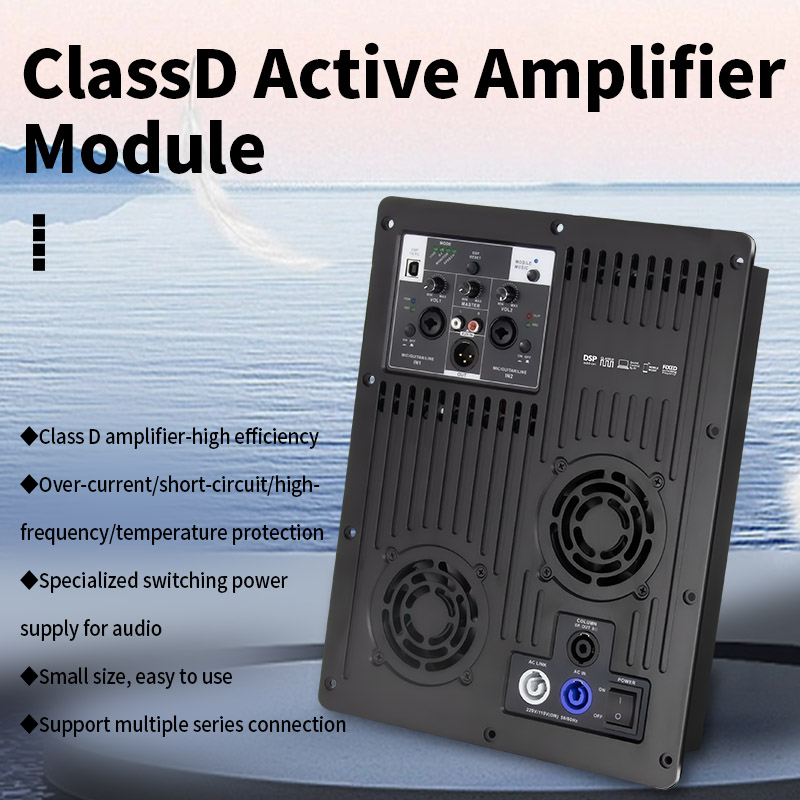
In professional audio systems, Lihui Technology leverages this efficiency in their Class D modules to provide high-quality, powerful sound systems with reduced energy consumption and smaller form factors.
Key Benefits of Class D Amplifiers
High Efficiency and Power Management
Class D amplifiers are known for their exceptional energy efficiency. Unlike traditional amplifiers, which waste energy as heat, Class D amplifiers operate by rapidly switching transistors on and off. This on/off switching reduces the power loss significantly, making them highly efficient—often achieving up to 90% efficiency.
● Reduced heat generation: As less power is lost as heat, Class D amplifiers run cooler, requiring less cooling.
● Lower energy consumption: This leads to lower operating costs and reduced environmental impact.
With Lihui Technology’s Class D amplifiers, users benefit from cutting-edge technology designed to optimize power usage, offering superior performance without the excessive energy consumption of traditional designs.
Efficiency Comparison with Other Amplifier Types
Amplifier Type | Efficiency (%) | Heat Generation | Application Benefits |
Class D | 90%+ | Low | Ideal for compact systems and high power output |
Class A | 25% | High | Best for pure sound quality but inefficient |
Class AB | 50-70% | Moderate | Common in consumer audio but less efficient than Class D |
Compact and Space-Saving Design
One of the standout features of Class D amplifiers is their compact size. Thanks to the efficient switching technology, these amplifiers require smaller components compared to traditional designs. This results in more compact audio systems—a huge advantage for both portable and large-scale applications.
● For Portable Systems: Class D amplifiers make it possible to integrate powerful sound systems into smaller, more portable devices without sacrificing performance.
● For Large Sound Systems: The reduced size helps create lighter, more space-efficient professional audio setups, such as active speakers and subwoofers.
Lihui Technology's Class D amplifiers are specifically designed to offer space-saving solutions without compromising on sound quality. These compact units are perfect for active speakers and subwoofers, ensuring high performance even in tight spaces.
Cost-Effectiveness and Cooling Savings
Class D amplifiers not only provide energy efficiency, but they also save money by reducing the need for cooling systems. Traditional amplifiers often rely on large heat sinks or fans to manage excess heat. Class D amplifiers, on the other hand, generate less heat, which translates to lower costs in both production and maintenance.
● Lower operational costs: Since less power is wasted as heat, users don’t need to invest in expensive cooling systems.
● Cost-effective design: Class D’s smaller form factor and energy efficiency make it a cheaper solution for manufacturers and consumers alike.
Performance Considerations of Class D Amplifiers
Sound Quality and Distortion
While Class D amplifiers offer many advantages, including high efficiency and compact size, some users may notice certain distortions or a "digital" sound compared to traditional amplifiers. This is primarily because Class D amplifiers convert analog signals into a series of pulses, and any imperfections in the pulse-width modulation (PWM) process can introduce distortion, especially at higher frequencies.
● Digital sound quality: Many users report a "hard" or "cold" sound with Class D amplifiers due to the nature of pulse modulation, especially when used in full-range audio systems.
● Distortion types: The most common distortions include harmonic distortion or aliasing, which can occur when the switching frequency is not high enough, leading to unwanted noise in the output.
However, Lihui Technology has addressed these challenges in their Class D amplifiers. They integrate advanced digital signal processing (DSP) technology, which allows for precise signal control, reducing distortion and improving sound quality. Through advanced filtering, Lihui’s amplifiers minimize unwanted noise and enhance the overall clarity and fidelity of the sound.
Electromagnetic Interference (EMI) and Its Management
Another consideration with Class D amplifiers is electromagnetic interference (EMI). Since these amplifiers use rapid switching to process the audio signal, they can generate electromagnetic noise that may affect nearby devices or degrade sound quality. This is particularly important in environments with sensitive equipment or other audio devices.
● EMI challenges: The high-frequency switching in Class D amplifiers can create radiated and conducted EMI, which could interfere with nearby electronics, audio equipment, or even cause distortions in the audio output itself.
● Impact on the environment: EMI can disrupt other devices, such as wireless communication systems or sensitive audio equipment in high-end setups, leading to performance degradation.
To combat these issues, Lihui Technology incorporates various EMI management techniques in their Class D designs. These include:
● Shielding and optimized circuit layout: Careful placement of components and use of shielded enclosures to prevent EMI from escaping the amplifier.
● Use of low-pass filters: These filters, particularly in high-frequency switching circuits, help to smooth out the pulse signal and reduce EMI.
● Power supply decoupling: Ensuring that the power supply system is properly decoupled from the signal path to minimize noise and prevent power-related interference.
Applications of Class D Amplifiers in Audio Systems
Subwoofers and Active Speakers
Class D amplifiers are perfectly suited for active speakers and subwoofers due to their exceptional efficiency and compact size. Traditional amplifiers tend to be bulky and produce excess heat, which can be a significant drawback when building speakers or subwoofer systems. Class D amplifiers, on the other hand, offer a solution to these issues by providing high output power without the heat dissipation challenges.
● Efficiency: Class D amplifiers are highly efficient, meaning they use less power and produce less heat compared to Class A or AB amplifiers.
● Compact form factor: Their small size makes them ideal for integration into active speakers and subwoofer designs, where space is often limited.
● Powerful output: Despite their size, Class D amplifiers can provide substantial power, making them ideal for deep, rich bass reproduction in subwoofers and full-range sound in active speakers.
Professional Sound Reinforcement Systems
The adoption of Class D amplifiers is growing rapidly in large-scale professional audio systems, including PA systems, concert halls, and other performance venues. These environments require amplifiers that can deliver high output power while remaining compact, reliable, and cost-effective. Class D amplifiers check all these boxes.
● Powerful and reliable: Class D amplifiers can deliver high power, often up to several thousand watts, needed for large venues and outdoor events.
● Durable design: With less heat generated, Class D amplifiers are more reliable over long periods, especially in demanding environments like concerts or theater productions.
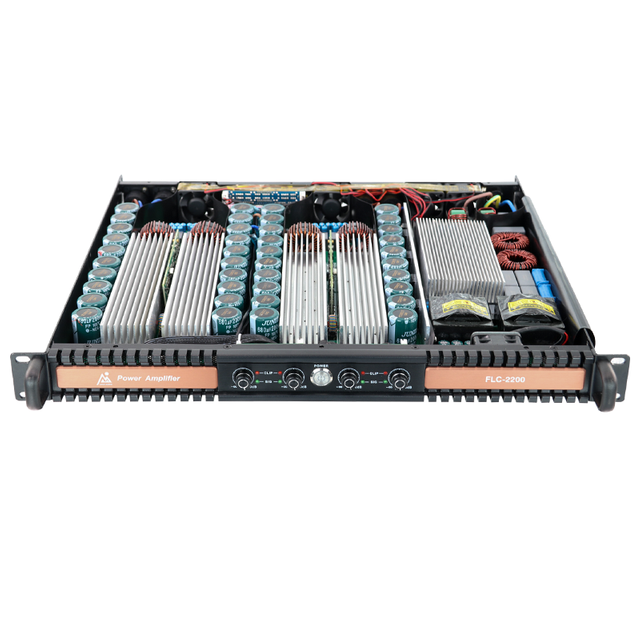
● Space-saving: The small size of Class D amplifiers allows them to fit easily into tight spaces, making them suitable for rack-mounted installations.
Lihui Technology ensures that their Class D amplifier solutions are engineered for maximum durability, making them an excellent choice for professional audio systems that need to perform at the highest levels.
Class D Amplifiers in Professional Audio Systems
Feature | Class D Amplifiers | Traditional Amplifiers |
Power Efficiency | 90%+ | 25-70% |
Heat Generation | Minimal | High |
Size and Weight | Compact and lightweight | Bulky and heavy |
Reliability in Long Use | High | Moderate |
Installation Flexibility | Flexible and space-saving | Requires large spaces |
Portable Audio and Consumer Electronics
Class D amplifiers are also a game-changer for portable audio systems and consumer electronics, such as Bluetooth speakers, mobile devices, and headphones. The efficiency and compact design of Class D amplifiers make them ideal for these types of applications, where battery life and portability are critical.
● Energy efficiency: The low power consumption of Class D amplifiers helps extend battery life in portable devices, making them perfect for wireless speakers or headphones.
● Lightweight design: The compact size of Class D amplifiers allows for integration into small, portable devices without compromising on sound quality.
● High output power: Despite their size, Class D amplifiers deliver clear, powerful audio that is critical for modern portable audio systems.
Conclusion
Class D amplifiers offer high efficiency, compact size, and powerful performance. They reduce heat generation and are cost-effective, making them ideal for modern audio systems. Lihui Technology provides cutting-edge Class D amplifier solutions, ensuring durability and high sound quality for both consumer and professional audio applications.
FAQ
Q: What are Class D amplifiers?
A: Class D amplifiers are switching amplifiers that use pulse width modulation (PWM) for efficient sound amplification, reducing power loss and heat generation.
Q: How do Class D amplifiers work?
A: They convert audio signals into a pulse stream, using switching technology to improve efficiency and reduce heat, making them ideal for compact audio systems.
Q: What are the benefits of Class D amplifiers?
A: They offer high efficiency, compact design, cost savings, and reduced heat generation, making them perfect for active speakers, subwoofers, and portable audio systems.
Q: Are Class D amplifiers used in professional audio systems?
A: Yes, Class D amplifiers are increasingly used in professional sound reinforcement systems, providing powerful, efficient, and reliable amplification for large-scale venues.
Q: Why choose Lihui's Class D amplifiers?
A: Lihui Technology offers innovative, cost-effective Class D amplifiers that deliver high performance, durability, and energy efficiency for both consumer and professional audio applications.


 +86-18822957988
  rick@lihuitech.com
  +86-13925512558
  Hengbang Technology Park Lihui Technology Co., Ltd., No. 8 Weiheng Road, Niushan Industrial Zone, Dongguan City